
How linear drive architectures deliver versatility without complexity in medical technology
In laboratory instruments, linear motion is where precision meets practicality. Whether positioning a pipette, advancing a fluid, or moving a sample through a preparation workflow, designers need motion that is accurate, repeatable, and dependable over long duty cycles. At the same time, however, the instruments must remain compact, easy to assemble, and adaptable to different configurations.
With diagnostic platforms trending toward higher throughput and modularity, OEMs need motion systems that scale easily across components without adding integration complexity or forcing a complete redesign. Linear drive architectures solve this challenge by providing a straightforward, configurable way to deliver precise linear motion – making it an increasingly valuable solution in medical motion designs.
At a basic level, a linear drive converts rotational motion into controlled linear movement, typically using a lead screw or ball screw and nut assembly. It is a familiar principle, but when thoughtfully applied, it offers a powerful combination of precision, flexibility, and simplicity that suits a wide range of laboratory applications.
Why linear drives suit medical technology
Laboratory instruments often require fine positional control rather than raw power. Small changes in position can have a significant impact on accuracy, repeatability, and ultimately test results. A linear drive is well suited to this environment because the relationship between motor speed and screw pitch clearly defines the linear movement. This makes it easier to achieve predictable, repeatable positioning across cycles.
Just as importantly, spindle drives scale well across different applications. By adjusting elements such as motor technology, gear reduction, drive diameter, or screw pitch, designers can tailor speed, force, and resolution to suit tasks ranging from gentle fluid handling to higher-force actuation, all while using a common underlying motion concept.
For applications such as pipetting axes, sample preparation workstations, and syringe pumps, this balance of precision and adaptability is particularly valuable.
Designing flexibility into the motion system
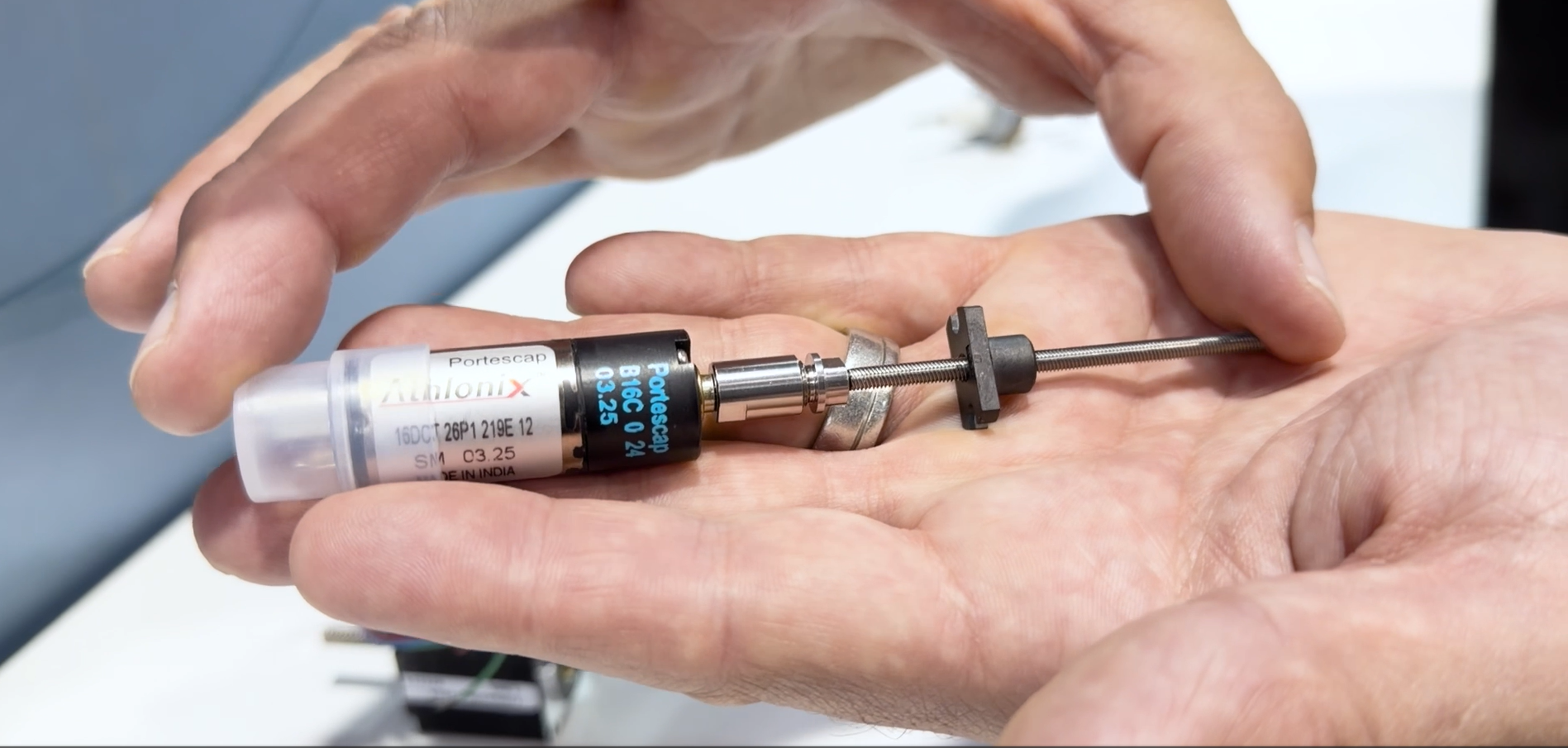
A typical linear drive architecture brings together several core elements: a motor to provide rotational power, a gearbox to increase torque and refine resolution, an encoder to confirm position, and a lead screw and nut assembly to translate rotation into linear motion.
Each of these elements plays a distinct role. The motor defines the available power and speed range. The gearbox allows finer control and higher force without increasing motor diameter. The encoder provides feedback for confirmed positioning, while the lead screw pitch determines the precision of the linear movement.
Taken together, this architecture allows designers to fine-tune motion behaviour to the needs of the instrument. Crucially, it also allows those adjustments to be made without fundamentally redesigning the rest of the system. That flexibility helps medical OEMs adapt platforms for different use cases or future upgrades without starting from scratch.
Reducing complexity where it matters
While linear drives offer clear performance advantages, their real value often shows up in the development process itself. Designing linear motion by sourcing individual components from multiple suppliers can quickly become time-consuming. Each interface must be validated, tolerances checked, and performance proven across operating conditions.
By approaching the spindle drive as a coherent motion architecture, rather than a collection of individual parts, much of that effort can be reduced. Interfaces are already considered, component selection is aligned, and performance expectations are clearer from the outset. For OEM teams under pressure to rapidly solve the motion architecture without sacrificing reliability, this can make a meaningful difference.
Assembly can also be simplified. Instead of integrating several discrete components into the instrument, designers designate a single motion system that is easier to install, test, and support.
Supporting real-world laboratory applications
In practical terms, linear drive architectures are used across a wide range of laboratory instruments. In pipetting systems, they support smooth, controlled movement that protects sample integrity. In sample preparation workstations, they provide consistent positioning across repeated cycles. In syringe pumps, they enable accurate dosing and repeatable flow control.
Across all of these applications, reliability is critical. Laboratory instruments often operate for extended periods, sometimes around the clock. Motion systems must maintain performance without frequent adjustment or maintenance. The inherent simplicity of a complete linear mechanism helps support this long-term stability.
Why a systems-led design approach matters
As part of Regal Rexnord, linear drive architectures benefit from a broader motion perspective that brings together expertise in motors, gearing, feedback, and linear components. Brands such as Portescap and Thomson contribute proven technologies that support precision and durability in demanding medical environments.
By combining these capabilities, Regal Rexnord helps medical OEMs apply linear drive architectures as part of a wider, systems-led approach to motion design. The goal is to reduce complexity and manage it intelligently, so that flexibility and performance are built in from the start.
In an industry where laboratory instruments must deliver accurate results, adapt to changing needs, and reach the market efficiently, linear drive architectures offer a practical, well-understood way to achieve precise linear motion without unnecessary complication.
Image 1: Athlonix™ mini DC motors allow you to find the perfect solution based on your specific performance requirements.
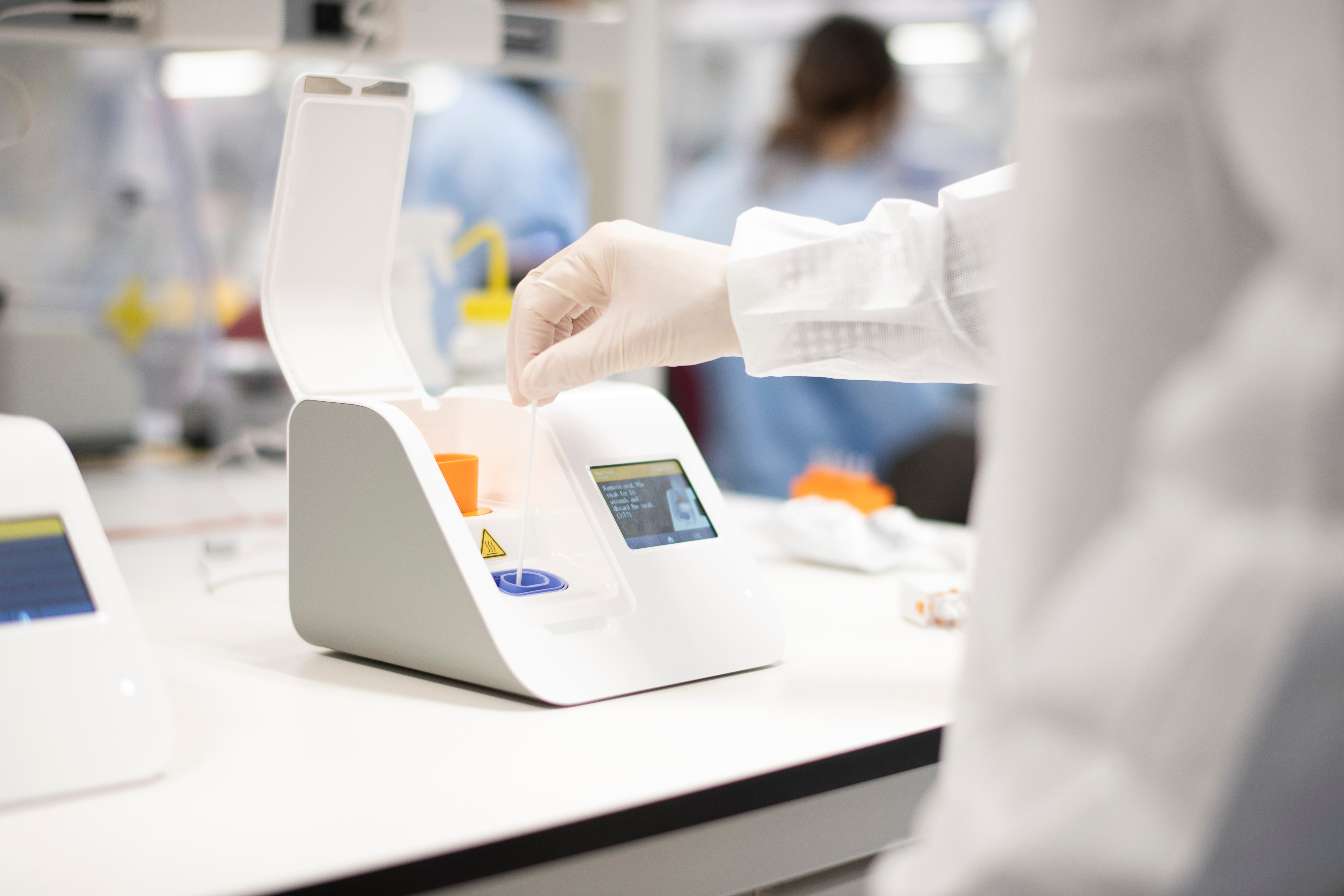
Image 2: In laboratory instruments, linear motion is where precision meets practicality.
About Regal Rexnord
Regal Rexnord's 30,000 associates around the world help create a better tomorrow by providing sustainable solutions that power, transmit and control motion. The Company's electric motors and air moving subsystems provide the power to create motion. A portfolio of highly engineered power transmission components and subsystems efficiently transmits motion to power industrial applications. The Company's automation offering, comprised of controllers, drives, precision motors, and actuators, controls motion in applications ranging from factory automation to precision tools used in surgical applications.
The Company's end markets benefit from meaningful secular demand tailwinds, and include discrete automation, food & beverage, aerospace, medical, data center, energy, residential and commercial buildings, general industrial, and metals and mining.
Regal Rexnord is comprised of three operating segments: Industrial Powertrain Solutions, Power Efficiency Solutions, and Automation & Motion Control. Regal Rexnord is headquartered in Milwaukee, Wisconsin and has manufacturing, sales and service facilities worldwide. For more information, including a copy of our Sustainability Report, visit RegalRexnord.com.