

Latest Press Releases

Kidde Commercial lancia EXCELLENCE SmartCell Gateway: la porta verso l’eccellenza wireless
23 March 2026
Italian
E se esistesse un’interfaccia capace di trasformare la tua sicurezza antincendio in un sistema più intelligente e connesso, senza dover rifare il cablaggio esistente? Immagina di ampliare il tuo sistema di rivelazione incendi senza fermare le attività. Immagina un gateway wireless, perfettamente integrato con il protocollo della tua centrale incendio indirizzabile. Con EXCELLENCE SmartCell Gateway di Kidde Commercial, questa evoluzione è possibile.
Read More

Kidde Commercial launches EXCELLENCE SmartCell Gateway – Your Gateway to Wireless Excellence
20 March 2026
English (United Kingdom)
What if one gateway could unlock smarter fire safety without rewiring everything you’ve built? Imagine expanding your fire detection system without disruption. Imagine a wireless system, fully integrated with your addressable panel protocol. With Kidde Commercial’s EXCELLENCE SmartCell Gateway, all of this is possible.
Read More

Power, precision, and practical efficiency
19 March 2026
English (United States)
Electric motors are the workhorses of modern industry. From packaging and assembly to robotics and material handling, almost every motion depends on them. Studies suggest that motors account for around two-thirds of all electricity consumed in industry[1]. Even small gains in efficiency therefore have a measurable impact — not only in energy costs but also in meeting wider environmental and regulatory goals.
Read More
Full steam ahead: why training is vital to optimise steam applications
11 March 2026
English (United Kingdom)
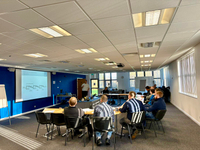
Often misunderstood, steam powers a wide range of modern industrial processes, from precision industrial-scale cooking through to electronics manufacturing. Getting steam control right is critical, not just for application performance, but also for efficiency, maintenance, and safety requirements. Specialist training on steam system design and management ensures that engineering teams can optimise their systems and develop tailored solutions.
Read More

Mastering motion profiles to boost precision and throughput
10 March 2026
English (United Kingdom)
Calculating an application’s motion profile is crucial to optimising its performance. While modern control architecture can create profiles according to high-level limits, understanding the underlying mathematics allows engineers to improve precision and throughput.
Read More

Worn Again Technologies unveils the Accelerator
6 March 2026
English (United Kingdom)
Worn Again Technologies unveils the Accelerator, the next major step towards commercialising its pioneering Textile-to-Fibre recycling process and proving the technical and economic feasibility of polycotton recycling.
Read More

Enclosure assembly: why external support can save time and costs
4 March 2026
English (United Kingdom)
For OEMs and integrators who rely on industrial enclosures to protect their devices and control systems, assembly is another task to add to the project timeline. Fitting items ranging from DIN rails and terminals through to keypads and labelling, assembly can also be a resource-intensive activity.
Read More

Electric linear actuators deliver precision and reliability in harsh environments
24 February 2026
English (United Kingdom)
Electric linear actuators are increasingly preferred over hydraulic and pneumatic systems for applications requiring precise, repeatable linear motion, even in extreme environments. Fully sealed housings protect internal mechanics and electronics from dust, moisture, corrosion, and shock, while maintaining consistent force and precise positioning.
Read More

Enclosures for concrete: streamlining electrical installation to meet demanding construction schedules
24 February 2026
English (United Kingdom)
The government’s new homes and construction initiatives mean that speed of development is essential. To achieve these goals, concrete is playing an important role, with off-site manufacturing optimising efficiency. Across all building developments, fast and secure electrical installation is fundamental, but when working with concrete, effective and reliable integration of electrical enclosures and conduits is an even more important process.
Read More

Chlorine filtration in dialysis – how advanced sensing is raising the bar
24 February 2026
English (United Kingdom)
In 2022, more than 30,000 people in the UK were undergoing kidney dialysis. For every one of those patients, water quality is not a background consideration but a frontline safety issue. Dialysis machines rely on large volumes of treated water, and any trace contaminants that remain can pass directly into the bloodstream. Among the most critical of these contaminants is chlorine.
Read More

The mechatronic approach to designing motion as a system
24 February 2026
English (United States)
When people talk about mechatronics, it’s often framed as something futuristic — the next big leap in automation. In truth, it describes something engineers have been working toward for decades: designing machines where the mechanical, electrical, and control systems work together as one.
Read More

The critical role of field services in reciprocating compressor maintenance
18 February 2026
English (United States)
In the dynamic world of gas storage and transportation, reciprocating compressors are the beating heart of the infrastructure. Tasked with moving large volumes of gas across pipelines and into storage facilities, these machines must operate with maximum efficiency and reliability.
Read More

Why hybrid exhausts fail (and how the aftermarket can help)
12 February 2026
English (United Kingdom)
Hybrid vehicles are often seen as a smart compromise for the modern driver. They promise lower emissions, improved fuel efficiency and quieter running – especially in urban environments. For many buyers, they feel like a sensible step towards electrification without giving up the familiarity of a petrol engine.
Read More

How Portescap empowers humanoid robots
11 February 2026
English (United Kingdom)
As the robotics sector steadily moves from science fiction to factory floor, a new generation of humanoid robots is emerging to reshape industry, healthcare, and daily life. These machines are designed to do more than automate – they’re built to move like us, work alongside us, and, at times, even stand in for us.
Read More
Fast and precise chlorine detection protects Veolia’s RO membranes a year on from commissioning
5 February 2026
English (United Kingdom)
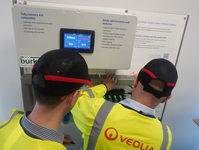
Rapid and accurate detection of chlorine is vital to protect a reverse osmosis (RO) system. While reagent-based approaches can be costly and impractical to manage, traditional amperometric chlorine electrodes don’t respond fast enough when the most precise detection is required.
Read More