

Latest Bürkert Fluid Control Systems Press Releases
Building small energy savings into sustainability win for data centres
4 June 2026
English (United Kingdom)
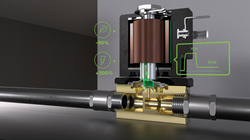
As digital infrastructure expands to support AI, cloud computing and continuous connectivity, sustainability is becoming a defining challenge for data centre operators. While significant attention is paid to power-hungry processors and large-scale cooling systems, a quieter source of energy consumption lies in the thousands of small components working continuously in the background.
Read More
Reducing fluid control and automation complexity in pharma process development
19 May 2026
English (United Kingdom)
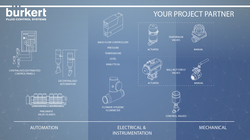
Designing and building pharmaceutical processes or skids demands close coordination between mechanical, electrical and instrumentation, and automation engineering teams. Fragmented design and vendor selection can introduce challenges in integration and validation
Read More
Bürkert solves tank pressure drift with sub-200 ms gas control for hygienic applications
7 May 2026
English (United Kingdom)
Flow control specialist Bürkert has released a new system that optimises gas pressure control precision for hygienic processes. Designed for food and beverage producers as well as pharmaceutical and bio-pharmaceutical manufacturers where product quality and safety are critical, Bürkert’s new Type 8880 system has improved gas pressure control with ten-times faster response. The automatic, integrated pressure control system provides a response time lower than 200 ms (milliseconds).
Read More
Cutting valve energy use by up to 80% in data centre cooling
22 April 2026
English (United Kingdom)
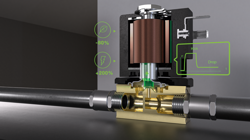
In data centres, direct-to-chip liquid cooling relies on fast-acting valves to regulate coolant flow and protect servers from overheating. Yet across server racks operating 24/7, the cumulative energy demand of continuously energised solenoid valves presents cost and sustainability challenges. However, Kick & Drop coil technology offers a solution to this inefficiency by using a high-power ‘kick’ to actuate the valve, followed by a low-energy ‘drop’ to hold position. The design can reduce energy consumption by up to 80%.
Read More

Media-separated pressure-relief valve protects components and optimises control
7 April 2026
English (United Kingdom)
Flow control specialist Bürkert has released a new pressure-relief valve that protects sensitive components in fluidic systems against high pressure peaks, and also provides media separation for use with aggressive or sensitive liquids.
Read More
Smart sensors safeguarding water quality in food manufacturing
26 March 2026
English (United Kingdom)
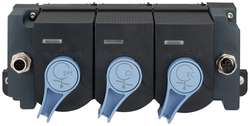
Water is one of the most crucial resources in food processing and manufacturing. From ingredient blending and product washing to steam generation and clean-in-place (CIP) systems, consistent water quality underpins both product safety and brand reputation.
Read More

Full steam ahead: why training is vital to optimise steam applications
11 March 2026
English (United Kingdom)
Often misunderstood, steam powers a wide range of modern industrial processes, from precision industrial-scale cooking through to electronics manufacturing. Getting steam control right is critical, not just for application performance, but also for efficiency, maintenance, and safety requirements. Specialist training on steam system design and management ensures that engineering teams can optimise their systems and develop tailored solutions.
Read More
Chlorine filtration in dialysis – how advanced sensing is raising the bar
24 February 2026
English (United Kingdom)
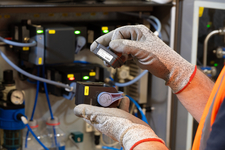
In 2022, more than 30,000 people in the UK were undergoing kidney dialysis. For every one of those patients, water quality is not a background consideration but a frontline safety issue. Dialysis machines rely on large volumes of treated water, and any trace contaminants that remain can pass directly into the bloodstream. Among the most critical of these contaminants is chlorine.
Read More

Fast and precise chlorine detection protects Veolia’s RO membranes a year on from commissioning
5 February 2026
English (United Kingdom)
Rapid and accurate detection of chlorine is vital to protect a reverse osmosis (RO) system. While reagent-based approaches can be costly and impractical to manage, traditional amperometric chlorine electrodes don’t respond fast enough when the most precise detection is required.
Read More
Stop the steam: Bürkert’s flow control system reduces energy costs at aerospace plant
27 January 2026
English (United Kingdom)
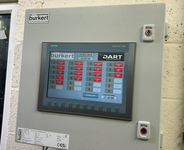
At a specialist aerospace equipment manufacturer in Portsmouth, an initiative to reduce energy costs identified steam energy usage that could be optimised. Dart Aerospace involved Bürkert’s engineering team to develop a system that could automatically close steam flow during non-operational periods. This custom-developed flow control system was set live in January 2025 and achieved return on investment in a matter of months.
Read More
An interdisciplinary team taking concrete steps
12 December 2025
English (United Kingdom)
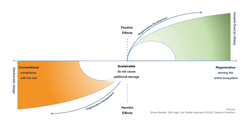
Sustainability is about much more than just reducing carbon emissions. It also entails a sense of responsibility for social and environmental matters, something that has always been important to the fluidics experts at Bürkert. However, the family-run business believes that previous approaches in this area have not gone far enough in tackling global climate change.
Read More

Valve diagnostics: providing new insights for medical and lab applications
10 December 2025
English (United Kingdom)
Across a range of medical and laboratory applications, confirmation of liquid flow status is critical, but integrating sensors or electronics to check the performance of functions like valve switching adds design complexity. Bürkert has developed a set of algorithms to monitor the induced current within its electrodynamic whisper valves, presenting a range of diagnostic capabilities to identify faults for immediate and preventative maintenance, and increased process intelligence.
Read More